Lucy Taylor, CEO of MS Trust, discusses the charity's new strategy and rebrand, shaped by the evolving needs of people living with MS.
_______________________________________________________________________
What was the driving force behind creating the strategy and the rebrand for MS Trust?
Lucy: There were quite a few different reasons, but I'll keep them brief. I think the main driving force was the fact that the MS landscape is changing so much and it's continuing to change. Since we last did a strategy treatments have changed, the diagnostic criteria has changed, there’s now a new 10-year plan for the NHS.
It was led by people living with MS and what their needs were and wanting to make sure that we have the biggest impact for them. We were an organisation that was founded on our information, and we continue to provide that. We hear from people all over the world about the quality of our information, how important it is. But we're also aware that the way people consume information is changing. Everybody is different in terms of what they want and how they want to receive their information. MS is a very complex condition. Everybody's experience of it is different. Some people want to read in detail [with a] huge amount of research. Others just want light touch or deeper information at different times. Some people consume that digitally, others want print. We wanted to make sure that we could continue being there for people in the way that they wanted it. That was another important factor; accessibility, reaching the largest, most diverse range of [people in the] MS community as we could. And we felt like that was something we needed to look at to make sure we were continuing to be relevant.
An important part was defining our purpose as a charity. I think it's easy to keep thinking ‘we want to do this’ and ‘we want to do that’, but defining what we are here to do [is important] so that people with MS understand what we're here to do. It helps us in our decision making as well, because I think it's as easy to keep adding things, but you have to think, ‘actually, we're not here to do that, it isn't our core purpose’. The process of defining that helps us to have a greater impact. The brand followed on from those decisions. And we're fortunate that we did them in tandem, the strategy was further along and we made some key decisions around the strategy that informed the rebrand. The rebrand was about supporting the strategy… If people can't find us or it's not reaching the right people, it's not helpful.
How did you decide on the three strategic priorities?
Lucy: Once we did find our purpose, other things fell into place. Those things were areas that we already established credibility in and we knew we had impact. It was important to us to go back to our community and say, ‘what do you need? What's important about what we do? What do you need going forward?’. rather than just making up something.
We were aware that we couldn't do everything and there are things that people want us to do that are either outside of our remit or that we can't change. We can't fix the problems in the NHS, but we can make a difference and have an impact working with the NHS.
In terms of each of the three priorities, everybody's different and we need to meet people and make sure we are actually supporting them in the way that they want. We are aware that the health system is complex and MS as a condition is very complex. People talk to us a lot about the challenges of navigating those things. So we feel like we have to listen to that and play a role in helping people to navigate it.
The excellence, equity and consistency in treatment and care, [it’s not about] just the excellence, which is important, but the equity and consistency. We know from what we hear that it's an enormous postcode lottery, from the experience that they have, the care they have, and the treatments they're able to access. We feel that shouldn't exist, there shouldn't be a huge diversity in how long it takes you to get treatment or how long it takes you to get a diagnosis or how long it takes you to get an MRI scan in different parts of the country. And so that equity and consistency is important for us. We have very strong relationships with the NHS and with health professionals and we feel we've got credibility in that space so we can influence and make a difference.
The final part is about research: it's about listening to people about what makes it difficult for them. That real experience is very important to us. The other part of that goal is about translating that into action. I hear all the time that there can be wonderful research going on, but if it doesn't translate.. We use our networks of health professionals, that we train and do professional development with, and we translate some of that into action.
And as I say, they're all areas that we do already. It's focusing on where we can have an impact within these.
Before the strategy and rebrand, there was a merger. What lessons from that can you share?
Lucy: It doesn't work if you just try and stick two organisations together. Ensuring that you have alignment in terms of your purpose and the impact that you want to make, right at the start is important.
We know that the MS community is pleased that we merged… They just want people to make a difference.
I would say to anybody considering it, that there is real value in it. [But] it's not just about the operational detail and the complex legal detail. The culture change is important as well. Obviously, there's a lot around communication and listening. The difficulty, I would say, for anybody who's in that process or who's going through it or considering it, is often you're under legalities of non-disclosure agreements. That communication can be difficult internally because not all your staff may know.
But between the two partners that are considering it, you keep talking and you keep adjusting and you keep listening. That's important.
The actual merger, there was so much detail to sort out that you don't always think about, aligning your bank systems and your data and your HR processes and all that operational detail. The actual merger part of it when it happened is just the start, that's when the conversations and the communications really start and you need to take everybody with you, keep talking and make that culture shift.
It takes probably a year to become a fully merged organisation from that point of merging. I think sometimes it's easy to forget that it's just the start of an ongoing process that has to continue.


Latest News
-
Arts venue charity to close after ‘exhausting all possible alternatives’
-
Hospice charity repeatedly targeted by criminals launches appeal to improve security
-
Children’s charity refreshes brand to be clearer ‘about who it is’
-
Monday movers – 12 October 2026
-
Council terminates charity’s £8.57m children's care home contract early amid staffing concerns
-
Charity boss shows her 'vulnerability' as she posts emotional grant rejection video


Beyond the funding squeeze: Using equities to secure your charity’s future
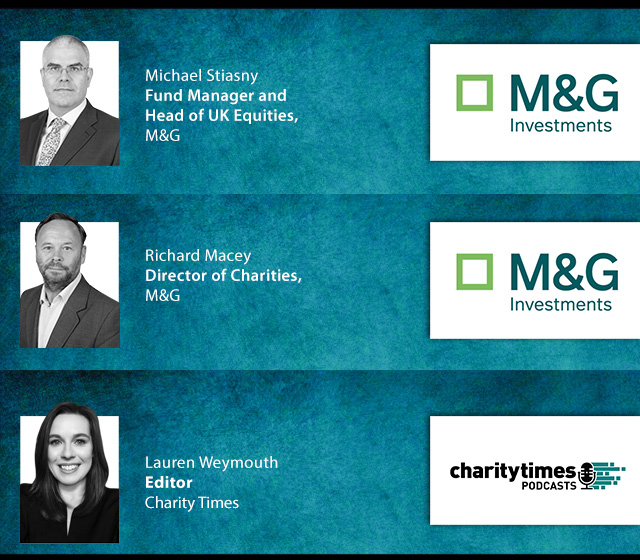
With charities facing increasing financial pressure and traditional income streams under strain, making investments work harder has never been more important. M&G’s Richard Macey and Michael Stiasny join Charity Times to discuss why equities remain a vital long-term asset class for charities, how organisations can balance income generation and growth, and the opportunities the current market environment may offer to help strengthen financial resilience.
Charity Times Awards 2023
Charity Times video Q&A: In conversation with Hilda Hayo, CEO of Dementia UK
Charity Times editor, Lauren Weymouth, is joined by Dementia UK CEO, Hilda Hayo to discuss why the charity receives such high workplace satisfaction results, what a positive working culture looks like and the importance of lived experience among staff. The pair talk about challenges facing the charity, the impact felt by the pandemic and how it's striving to overcome obstacles and continue to be a highly impactful organisation for anybody affected by dementia.




© 2021 Perspective Publishing Privacy & Cookies
Recent Stories