Mary Jane Roberts, CEO of Doctors in Distress, warns that with donor numbers falling and attention fragmenting, charity leaders must rethink how they cut through the noise.
_________________________________________________________________________
The UK Giving Report 2026 published by CAF gives a headline figure of individual giving. This has fallen from £15.4bn in 2024 to £14bn last year. The report does not just highlight a reduction but that the number of individuals giving has gone down – six million less givers in the last 10 years.
Reality for charity leaders mirrors this: a growing sense of a group of the population for whom it is acceptable to opt-out of this traditional plank of civil society. “Among those who did not donate 49% of higher and additional rate taxpayers suggested they were not interested in charities”.
We can describe what this challenge isn’t. It isn’t a crisis of trust. Trust in UK charities remains consistently high. Charity Commission annual figures for 2025 show a static 57% of the public have high trust. It also isn’t a lack of care by those who already fund – we can see that those who already support charities have often ramped-up their giving. A smaller number of donors are keeping the lights on at many small charities.
The reduced individual funding also isn’t the whole picture. Anyone who has cheered on their London Marathon runners or been overwhelmed by a volunteer response knows great passion abounds for some ways in which people can contribute to charity. This in the world of marketing is experiential, in charities it can be called giving-by-experience. Whether the experience is an Iron Man, attending a tea party, or being part of a craft challenge all provide the giver with an experience as fundamental to their giving.
So it seems we face a game of two halves: offline and online. Whilst in person charities are able to drive purpose, fun, connection and motivation we are often struggling with the equivalent online. Some of the most successful elements of the online work of charities has been linked to in real life events, challenges and activism.
It’s the direct funding online that is the knottiest issue. It’s where the attention war really has to be fought. People are deluged with a flood of marketing, information and content. How people choose to see or follow information as well as algorithms affect the visibility of charities. To say nothing of money to invest: clearly the commercial brands of this world are putting plenty of dosh into beautiful and innovative click-bait and alluring propositions.
Which leaves charities with huge questions for our future. Firstly, do we consolidate our focus to what real people can do in real places – and ally our online work to show those unique selling points? Do we try and counter the direct financial donation reductions or accept it, instead building on giving-by-experience or our own commercial income? Or do we bite the bullet and give serious investment to our online articulation of why we exist, how we fix problems, and how much better the world is because of us. All of which makes you think there’s an attention war going on in charity leaders’ minds, too.


Latest News
-
Arts venue charity to close after ‘exhausting all possible alternatives’
-
Hospice charity repeatedly targeted by criminals launches appeal to improve security
-
Children’s charity refreshes brand to be clearer ‘about who it is’
-
Monday movers – 12 October 2026
-
Council terminates charity’s £8.57m children's care home contract early amid staffing concerns
-
Charity boss shows her 'vulnerability' as she posts emotional grant rejection video


Beyond the funding squeeze: Using equities to secure your charity’s future
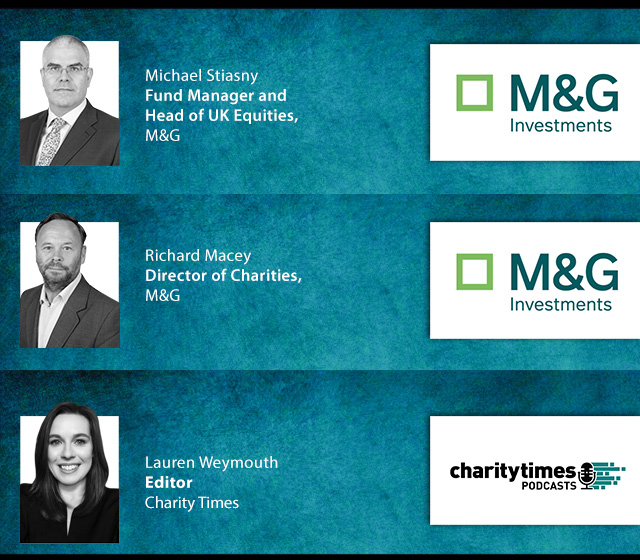
With charities facing increasing financial pressure and traditional income streams under strain, making investments work harder has never been more important. M&G’s Richard Macey and Michael Stiasny join Charity Times to discuss why equities remain a vital long-term asset class for charities, how organisations can balance income generation and growth, and the opportunities the current market environment may offer to help strengthen financial resilience.
Charity Times Awards 2023
Charity Times video Q&A: In conversation with Hilda Hayo, CEO of Dementia UK
Charity Times editor, Lauren Weymouth, is joined by Dementia UK CEO, Hilda Hayo to discuss why the charity receives such high workplace satisfaction results, what a positive working culture looks like and the importance of lived experience among staff. The pair talk about challenges facing the charity, the impact felt by the pandemic and how it's striving to overcome obstacles and continue to be a highly impactful organisation for anybody affected by dementia.




© 2021 Perspective Publishing Privacy & Cookies
Recent Stories