Anna Hargrave, CEO of GambleAware, explains how two decades of narrative change, ecosystem-building and sector collaboration culminated in the charity’s planned closure—and why systems change sometimes requires stepping aside.
__________________________________________________________________
On 31 March, GambleAware will close as the gambling harms sector transitions to a new statutory commissioning model. Following the Government’s gambling reform White Paper, a statutory levy on gambling operators was introduced in April 2025, alongside the appointment of new commissioners – the NHS (treatment), the Office for Health Improvement and Disparities (prevention) and UK Research and Innovation (research).
In February, the charity released its legacy report, with its central insight highlighting that if you want a lasting impact in public health or social change, you have to build the system around the issue, not just services within it.
There is a strong chance you are reading this as someone outside of the gambling harms sector and will be wondering how this is relevant to you? But the experience of building – and then handing over – a national system in a complex environment holds learnings that I’m confident other charities can benefit from.
Two decades ago, gambling harm was widely framed as an issue of individual responsibility and was an issue without a statutory mandate. With the support of the lived experience community and other third sector organisations in the space, an infrastructure was created that previously didn’t exist.
Narrative change required research, campaigning, and engagement with policymakers. When you successfully shift how a problem is understood, you influence who takes responsibility, how funding flows and how frontline services are designed. Whatever your cause, investing in evidence and collective advocacy to reshape the framing of the issue may be one of the most significant interventions available to you. Shared outcomes, quality standards and multi-year, trust-based funding can help move from fragmentation to coherence.
Operating in a space funded through voluntary industry contributions has brought scrutiny about GambleAware’s independence. Addressing this required transparent governance, clear operational boundaries and, ultimately, support for a more sustainable statutory funding model – the one we have lobbied for since 2017 that is now resulting in our closure.
For charities working in complex social issues, a question worth asking early is one we asked ourselves: “Are we building something that depends on us, or something that can last after us?”
Many charities operate in sensitive contexts – whether funded by corporate partners, philanthropists with strong views, or government contracts. The experience in these spaces suggests that legitimacy is not static, but requires clarity of purpose and transparent governance.
Equally, progress rarely happens in isolation, with short term, competitive funding often pulling organisations apart. Charities regularly find themselves competing with each other due to uncoordinated action by funders, but aligned commissioning with clear shared goals brings charities together.
The National Gambling Support Network (NGSN), launched in 2023 and made up of 13 third sector providers across the country, is an example of where aligned and informed commissioning can produce results. Over 110,000 people were supported in its first two years, but importantly, a coordinated system was created that has seen a joined-up approach to ensure beneficiaries receive the necessary support throughout their journey.
One of the strongest highlights from our legacy work that supported the NGSN’s formation, is the importance of embedding lived experience at every level – not simply in campaign storytelling, but also in strategy. Co-production is often referenced but less often resourced, so if people affected by an issue are not shaping decisions, blind spots emerge. However, if they are meaningfully involved, credibility and accessibility increase.
As statutory commissioners now take responsibility for research, prevention and treatment, there are both opportunities and risks. Transitions can consolidate progress or unintentionally fragment it if insight and relationships are lost.
Our legacy report is not intended as a retrospective celebration, but is an attempt to capture what it takes to build a credible, inclusive and evidence-led system in a complex space.
Those highlights are not unique to gambling harms, and are relevant to any charity seeking impact at scale.
In conclusion, when charities focus on strengthening the whole ecosystem – even when that ultimately means redesigning their own role within it – the impact can last long after the organisation itself steps aside.


Latest News
-
Arts venue charity to close after ‘exhausting all possible alternatives’
-
Hospice charity repeatedly targeted by criminals launches appeal to improve security
-
Children’s charity refreshes brand to be clearer ‘about who it is’
-
Monday movers – 12 October 2026
-
Council terminates charity’s £8.57m children's care home contract early amid staffing concerns
-
Charity boss shows her 'vulnerability' as she posts emotional grant rejection video


Beyond the funding squeeze: Using equities to secure your charity’s future
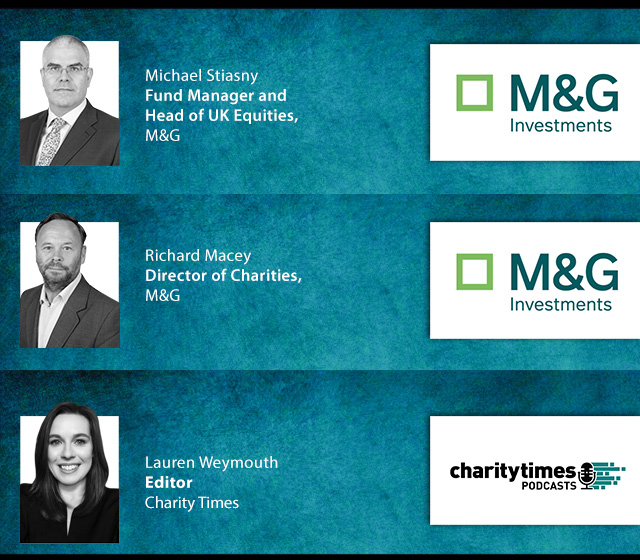
With charities facing increasing financial pressure and traditional income streams under strain, making investments work harder has never been more important. M&G’s Richard Macey and Michael Stiasny join Charity Times to discuss why equities remain a vital long-term asset class for charities, how organisations can balance income generation and growth, and the opportunities the current market environment may offer to help strengthen financial resilience.
Charity Times Awards 2023
Charity Times video Q&A: In conversation with Hilda Hayo, CEO of Dementia UK
Charity Times editor, Lauren Weymouth, is joined by Dementia UK CEO, Hilda Hayo to discuss why the charity receives such high workplace satisfaction results, what a positive working culture looks like and the importance of lived experience among staff. The pair talk about challenges facing the charity, the impact felt by the pandemic and how it's striving to overcome obstacles and continue to be a highly impactful organisation for anybody affected by dementia.




© 2021 Perspective Publishing Privacy & Cookies
Recent Stories