Charity websites are among the best-performing sectors for digital accessibility, but new analysis shows that barriers remain widespread.
The WebAIM Million 2026 report, which analysed the homepages of the world’s top one million websites, found an average of 56.1 accessibility errors per page, up from 51 the previous year.
Charity websites averaged 43 accessibility errors per page, 23.3% fewer than the overall average.
The report said that the charity sector performs relatively well compared to others, likely reflecting its focus on inclusion and community engagement. However, common accessibility issues remain widespread.
The most common barriers include low-contrast text (on 84% of home pages), missing alternative text for images (53%), unlabelled form inputs (51%), and empty links (46%) or buttons (31%).
WebAIM also found that homepage complexity is increasing, with pages now containing an average of 1,437 elements (such as images, buttons and links), a 22.5% increase in just one year. Almost 4% of all page elements contain an accessibility error, meaning users encounter a barrier on roughly one in every 26 elements.
Nexer Digital’s latest research into user behaviour also supports this. Its Hidden Journey study found that 79% of disabled users struggled to browse, 81% found selecting options difficult or impossible, and 81% struggled to complete tasks, highlighting how accessibility barriers appear throughout the entire journey.
Hilary Stephenson, managing director of Nexer Digital, said: “Charities are often built on principles of inclusion, so it’s encouraging to see stronger performance in this sector.
“But even here, the majority of websites are still not fully accessible. That means people may struggle to donate, access support or engage with services.
“Being better than average is not the same as being accessible. There is still a significant gap between intention and experience.”


Latest News
-
Arts venue charity to close after ‘exhausting all possible alternatives’
-
Hospice charity repeatedly targeted by criminals launches appeal to improve security
-
Children’s charity refreshes brand to be clearer ‘about who it is’
-
Monday movers – 12 October 2026
-
Council terminates charity’s £8.57m children's care home contract early amid staffing concerns
-
Charity boss shows her 'vulnerability' as she posts emotional grant rejection video


Beyond the funding squeeze: Using equities to secure your charity’s future
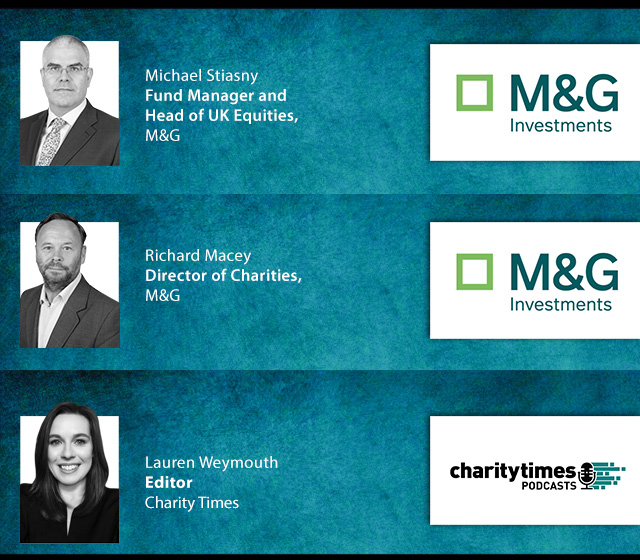
With charities facing increasing financial pressure and traditional income streams under strain, making investments work harder has never been more important. M&G’s Richard Macey and Michael Stiasny join Charity Times to discuss why equities remain a vital long-term asset class for charities, how organisations can balance income generation and growth, and the opportunities the current market environment may offer to help strengthen financial resilience.
Charity Times Awards 2023
Charity Times video Q&A: In conversation with Hilda Hayo, CEO of Dementia UK
Charity Times editor, Lauren Weymouth, is joined by Dementia UK CEO, Hilda Hayo to discuss why the charity receives such high workplace satisfaction results, what a positive working culture looks like and the importance of lived experience among staff. The pair talk about challenges facing the charity, the impact felt by the pandemic and how it's striving to overcome obstacles and continue to be a highly impactful organisation for anybody affected by dementia.




© 2021 Perspective Publishing Privacy & Cookies
Recent Stories