

Non-profit governance specialist Suneet Sharma explores how boards move from “ensuring we don’t break the rules” to “governance as a value-add”.
_____________________________________________________________________
Governance work can easily be relegated to a tick-box exercise or seen as jumping through hoops if approached in a piecemeal way, rendering it ineffective and your charity non-compliant. This article helps you approach governance in a way that can immediately unlock its value to your charity in five easy steps.
1. Have a uniform definition of governance
Define what you mean by governance from the outset so everyone has a shared understanding, such as the systems, practices, processes, and procedures we have in place to be governed well, in compliance, and enable strategic impact as a charity.
This allows you to be laser-focused and operationally define what is and is not a governance issue or priority.
2. Get the infrastructure in place
Any governance work should be delivering the bare essentials and hallmarks of compliance. Such as:
- Ensuring your annual report and accounts is drafted accurately and filed on time;
- Your AGM is run timely and properly
- Membership is facilitated and managed correctly;
- Your Board operates effectively to provide the right degree of strategic to operational oversight; and
- You have good record-keeping practices (such as data protection or conflict of interest);
- Decision making is robust and data-led (via high-quality board papers).
This groundwork represents the non-negotiable must-haves. If you aren’t sure where to start consider engaging a governance consultant or resource from an early stage to provide you with a checklist. It is at this stage, as well as other change management stages, they will have the most impact.
Having good governance infrastructure will pay dividends for years to come if built robustly with policies, practices and procedures that adapt and grow alongside your organisation.
3. Contextualise governance challenges and opportunities
Pose the question- how does this fit into the broader picture?
Good governance should link tasks, outputs and compliance back to the broader strategic drivers of the charity. Consider how good governance enables you as a charity to meet your strategic objectives- whether that is by unlocking impact, funding, enabling evaluation or embedding incremental development.
For example, when recruiting a first CEO for a small LGBTQ+ charity where the Chair wanted to apply, we focused on one governance question: how could we manage this conflict of
interest while serving the charity's best interests? This enabled us to appoint the best candidate at the conclusion of the recruitment process, which happened to be the Chair.
I have seen this done well in an Association where governance areas in a draft Strategy were all linked back from tasks/outputs, KPI’s and ultimately back to charitable objects.
4. Embed governance culturally and systematically
Make governance something that is culturally embedded, not an afterthought. You can do this by:
- including it as a standing item on your Board agenda or ensuring the correct levels of delegation and oversight if you work with a governance committee. All charities I have been a part of have done this and it enables them to operate with higher levels of assurance.
- Normalising conversations around succession planning, quorum, conflicts and referencing the constitution on a regular basis as appropriate. This keeps you anchored in the rules that need to be followed where they are necessary- this is like seasoning, a necessity but too much is overpowering. For example, keep a RACI matrix or succession planning log that has everything needed to identify single points of failure and dependencies.
- Ask your fellow trustees and leaders about their governance priorities regularly. This helps maintain a focus on governance as a positive and necessary part of enabling impact rather than a nice to have and bothersome jumping through hoops.
- Ensure when you hire new trustees that they complement and supplement a positive outlook on governance- this will ensure that your process and practices are safeguarded, respected and can be grown in partnership.
The best Boards I have seen do not shy away from grappling with difficult governance topics in a sensitive way. A little often is usually much more effective than a lot at once. Make governance work for and with your scheduling and cultural approach. In doing so acknowledge that good governance looks different depending upon the size and context in which your charity works.
5. Embrace cyclical evaluation and improvement
Good governance requires incremental and contextual improvement. Embrace continual evaluation to enable you to move forwards in your governance journey, whilst ensuring that governance reflects the size, context and work of the charity. Flexible and scalable infrastructure is key. For example, charity Mermaids was cautioned following an inquiry by the Charity Commission for not scaling its governance to meet the changing size and needs of the charity- an important example of how governance needs to grow in context.
Whether this is by feedback forms, strategy days, exit interviews, policy reviews, board discussion or otherwise, you must ensure you incrementally review your governance.
The charity governance code recommends that larger charities to have an external governance review once every three years to ensure their continuing impact, growth and development operate in an externally assured governance environment.
This requires both adaptability, resource and an acknowledgement that governance grows and changes as the charity does. However, this approach will serve you well in assuring funders, beneficiaries, regulators and other key stakeholders of the effective and compliant operation of your charity. To evidence this make sure governance work is filtered through to your Trustee Annual Report and Accounts.
________________________________________________________________
Suneet Sharma is an Governance Manager for a major subject association, experienced trustee and writer who is the editor of the resource Sharma on Governance and a governance consultant for Eastside People.



Beyond the funding squeeze: Using equities to secure your charity’s future
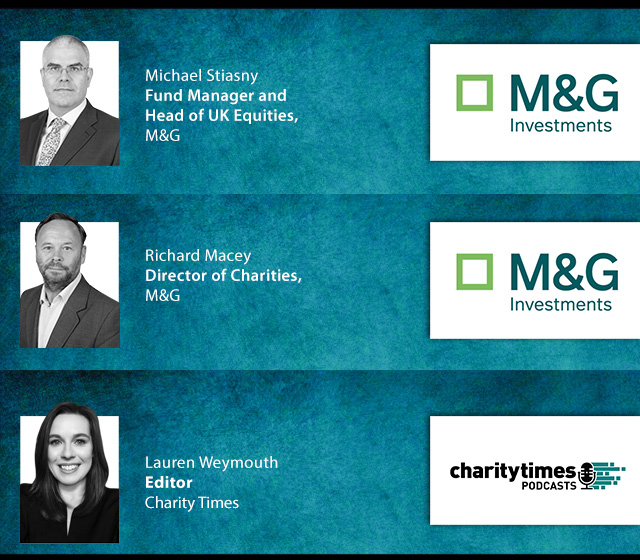
With charities facing increasing financial pressure and traditional income streams under strain, making investments work harder has never been more important. M&G’s Richard Macey and Michael Stiasny join Charity Times to discuss why equities remain a vital long-term asset class for charities, how organisations can balance income generation and growth, and the opportunities the current market environment may offer to help strengthen financial resilience.
Charity Times Awards 2023
Charity Times video Q&A: In conversation with Hilda Hayo, CEO of Dementia UK
Charity Times editor, Lauren Weymouth, is joined by Dementia UK CEO, Hilda Hayo to discuss why the charity receives such high workplace satisfaction results, what a positive working culture looks like and the importance of lived experience among staff. The pair talk about challenges facing the charity, the impact felt by the pandemic and how it's striving to overcome obstacles and continue to be a highly impactful organisation for anybody affected by dementia.




© 2021 Perspective Publishing Privacy & Cookies
Recent Stories