As my co-leadership journey alongside Clare Mills starts to unfold, we’ve been talking a lot more about feminist leadership. As much as I wear my feminist heart on my sleeve, it wasn’t until I started thinking about the leaders I had experienced throughout my career – and how we were doing things a bit differently at CFG – that I started to think about it more deeply.
Feminist leadership is usually defined as a values-driven approach to leadership that redistributes power, centres equity, and builds cultures of care, accountability and collective liberation. I’m discovering that the deeper you dive into the principles and frameworks, the more theoretical it can sound, but it has real, practical meaning in day-to-day life.
I believe a feminist perspective brings an added dimension to the co-leadership model. When Clare and I became co-CEOs, we knew we wanted to lean into our shared power and accountability. We want to nurture courage, joy and creativity, while fostering a working environment that listens and remains curious. The first thing we did was meet with every colleague to ask their views.
Trust, honesty and a healthy dose of vulnerability are important principles too. If one of us is having a bad day, we’ll share it. We want to build each other up, along with everyone else in the organisation. And, now more than ever, we want to emphasise zero tolerance for discrimination and harm. We’re conscious that behaviours set the tone. Leaders shape organisational culture, for good or bad, intentionally or otherwise.
Backup, not burnout
During the course of one week, or even a day, CEOs will wear many hats and make dozens of difficult decisions. Clare and I work to keep each other honest, grounded and focused and we hope that shows. Collective and self-care are important to us. Clare and I check-in with each other daily, but we rarely email or message each other outside of office hours. Whether it’s holiday time or something else – time off means time off.
Burnout and stress in our sector are all too real. The ‘worrying trend of CEOs quitting amid burnout fears’, spotlighted by ACEVO and Charity Times in January, should give us all pause for thought. There’s no ignoring the fact that the sector’s gender pay gap remains high at over 10%, and leadership diversity isn’t where it should be either – also highlighted by ACEVO.
There is evidence that co-leadership models are driving greater diversity. According to research conducted by the American non-profit Candid, 81% of co-led non-profits are led by at least one woman, and 43% have at least one BIPOC (Black, Indigenous and People of Colour) co-leader, compared to single-led organisations where 70% of CEOs are white. Encouraging data!
Sharing power is part of what we’re learning to do. These past months we’ve been looking at how we can transfer decision-making powers to those who need it to – and be there with backup when needed. This also involves creating an environment where colleagues have greater understanding and control over resources. This has shaped our thinking on how we support managers and how they in turn support their direct reports.
It takes structure and process, and it won’t happen all at once. We know we each have blind spots and areas for improvement. We won’t be the perfect leaders (we should be wary of anyone who claims to be!) but we truly believe that feminist co-leadership can advance both equity goals and organisational effectiveness.
Many of us are now recognising that ‘if you do not change direction, you may end up where you are heading.’ As we meet other charity leaders and share our approaches and experiences, we’re coming to realise we’re not the only ones who are excited about doing things a bit differently.


Latest News
-
Arts venue charity to close after ‘exhausting all possible alternatives’
-
Hospice charity repeatedly targeted by criminals launches appeal to improve security
-
Children’s charity refreshes brand to be clearer ‘about who it is’
-
Monday movers – 12 October 2026
-
Council terminates charity’s £8.57m children's care home contract early amid staffing concerns
-
Charity boss shows her 'vulnerability' as she posts emotional grant rejection video


Beyond the funding squeeze: Using equities to secure your charity’s future
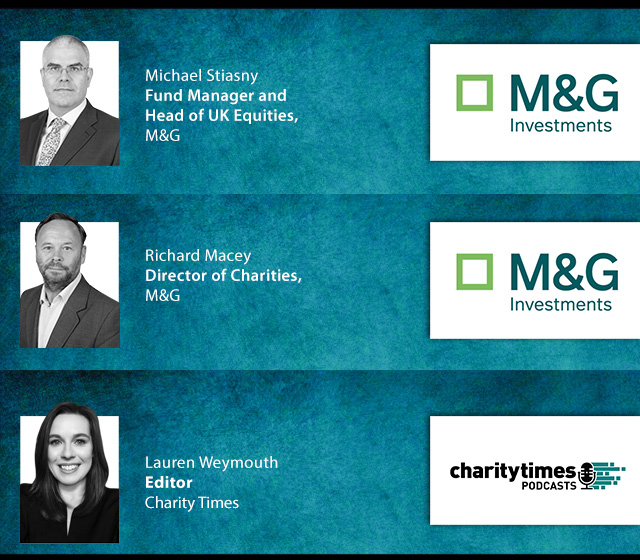
With charities facing increasing financial pressure and traditional income streams under strain, making investments work harder has never been more important. M&G’s Richard Macey and Michael Stiasny join Charity Times to discuss why equities remain a vital long-term asset class for charities, how organisations can balance income generation and growth, and the opportunities the current market environment may offer to help strengthen financial resilience.
Charity Times Awards 2023
Charity Times video Q&A: In conversation with Hilda Hayo, CEO of Dementia UK
Charity Times editor, Lauren Weymouth, is joined by Dementia UK CEO, Hilda Hayo to discuss why the charity receives such high workplace satisfaction results, what a positive working culture looks like and the importance of lived experience among staff. The pair talk about challenges facing the charity, the impact felt by the pandemic and how it's striving to overcome obstacles and continue to be a highly impactful organisation for anybody affected by dementia.




© 2021 Perspective Publishing Privacy & Cookies
Recent Stories