
Charities face mounting pressures, from rising costs to dwindling grants. Rob Huggins, founder and CEO of Gosforth Civic Theatre, explores why better public understanding could be the sector’s lifeline.
______________________________________________________________
As the founder and CEO of Gosforth Civic Theatre in Newcastle upon Tyne - the only public theatre founded and guided by people with learning disabilities in the country - I have worked in the charity sector for over 25 years.
During that time, I have always been aware that the understanding the public has about charities has steadily been decreasing. In my experience, charities have had to change a lot in that time, because the wider environment has changed. Back when I started in the sector, ‘business’ was a dirty word, but now, for a charity to grow and flourish, earned income is often a must - whether it is achieved by trading, or delivering contracts for services.
When I talk to people who don’t have much contact with the sector, they more commonly than not have a distorted idea about how charities operate financially, and because of this misunderstanding raising philanthropic income is challenging.
So I ask: How can charities bridge the gap of understanding between our sector and beyond? And how might improved understanding of charities help to support us in the future?
Over the past year or so, the financial environment for charities has shifted dramatically. Obviously the increases in National Insurance and the National Living Wage has been a huge challenge but also the grant funding landscape has changed massively.
The loss of European funds and the ever-dwindling government support has seen trusts and foundations facing record numbers of applications. Some funders have closed, and more and more are moving to ‘invite only’ models.
The reality of these challenges has meant Gosforth Civic Theatre as an organisation took the decision to shift how we generated our charitable income - and to be honest and transparent about our income in general.
I acknowledge all charities have different income structures and opportunities available to them, and so no one solution fits all. I do however think that the charity sector as a whole would benefit from encouraging better understanding from the wider community.
To do this, we took the decision to be as transparent as possible with our users, stakeholders, and neighbours, about the financial position we were facing due to the shifting environment that was out of our control.
Earlier this year, in a dedicated foreword in our quarterly ‘Whats on Guide’, I decided to talk openly about how our income is made up, the dramatic impact on our wage bill, and the challenges we were facing to fundraise. I then went on to describe our strategy, and emphasise the role that we needed our stakeholders to play in finding a model that would financially sustain us.
In further issues I continued the dialogue, sharing new insights and celebrating the impact the community had made on shifting our charitable income streams.
We have discovered that sharing financial information that we previously would have kept confidential has motivated patrons, businesses and the local community to give, volunteer, and support us in any way they could.
We also found that the better we got at telling our origin story and communicating our purpose, the more people understood the difficult decisions we sometimes had to make.
We definitely haven’t perfected telling our story or sharing our position, but this year has shown me that if charities want to be understood by the wider community, then it is our responsibility as a sector to harness transparency to generate that understanding.



Beyond the funding squeeze: Using equities to secure your charity’s future
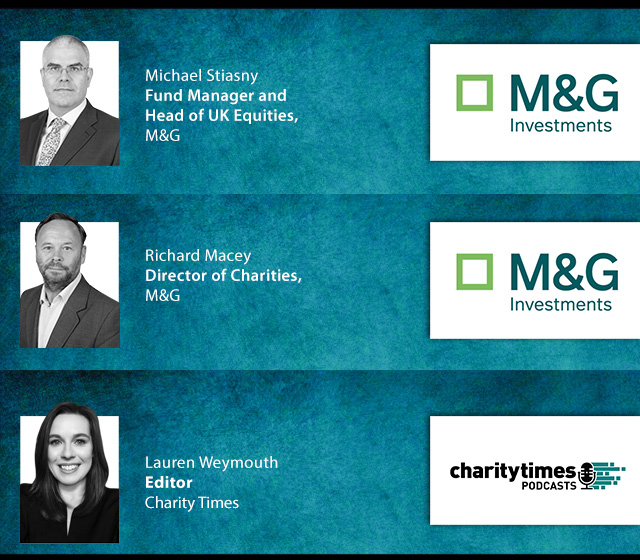
With charities facing increasing financial pressure and traditional income streams under strain, making investments work harder has never been more important. M&G’s Richard Macey and Michael Stiasny join Charity Times to discuss why equities remain a vital long-term asset class for charities, how organisations can balance income generation and growth, and the opportunities the current market environment may offer to help strengthen financial resilience.
Charity Times Awards 2023
Charity Times video Q&A: In conversation with Hilda Hayo, CEO of Dementia UK
Charity Times editor, Lauren Weymouth, is joined by Dementia UK CEO, Hilda Hayo to discuss why the charity receives such high workplace satisfaction results, what a positive working culture looks like and the importance of lived experience among staff. The pair talk about challenges facing the charity, the impact felt by the pandemic and how it's striving to overcome obstacles and continue to be a highly impactful organisation for anybody affected by dementia.




© 2021 Perspective Publishing Privacy & Cookies
Recent Stories