

Digital-native generations see social presence as strategy, not spin. In this article, Mary Jane Roberts, Interim CEO of Doctors in Distress, explores how evolving expectations are reshaping charity leadership, fundraising, and the reality behind the “shop front.”
_________________________________________________________
“It’s OK. It’s company image” said the shop assistant at Agent Provocateur, the racy British lingerie company. At the time the company had just been taken over by Sports Direct. The experience of employees was very different to the glitz and glam of the company’s marketing that filled their phone screens.
This was my first experience of Generation Z’s take on the perceived value of an organisation’s outward image. Yes, for as long as we can remember people get a flash of pride if they can say they work for a respected organisation. But what I had been slow to understand was digital natives’ commercial understanding of the ‘shop front’ on social media. A good image on socials was not a frustrating because it didn’t represent their lives. It was a boon, keeping up appearances, driving trade, striking out on new paths.
In our Charity leadership now, we wonder how our teams feel about investing more focus and resource into social media than ever before? As a leader, you are very aware that pressure on the level of staffing, stress on funds and workloads have increased. We all must be asking ourselves the same question. Is the modern system any better than the old system?
Before social media there was arguably less democratic means of gaining funds or attention, and lower innovation. And after social media we have larger reaches and new forms of fundraising. But these observations mask the upsides of what occurred before, and the downsides of now.
Many smaller charities are struggling achieve like the large charities. Social media’s system itself is speeding up the amplification of some charities, and rewarding those with deep enough pockets to invest, staff and convert online activity into funding and influence.
Where this differs from before is the form and type of patronage we as charities receive. Transactional charity relationships are on the rise. People buy a sweatshirt, gain an experience when fundraising, gain a sense of belonging from photographs of themselves at physical feats of derring-do.
Huge proportions of funding are now within two camps: the crowd-crush and the elite relationships. Crowd-crush describes the volume of applications for open funds, reported by funders as a worsening ratio of applications for each pound of available funding. These experiences are made more challenging by hours spent preparing applications which are increasingly not seen by a person until a late stage in the selection after automated selection hurdles. Elite relationships is a mirror of the wealth distribution changes of the UK: a concentration of wealth in increasingly smaller numbers of individuals. This is bad for charities. Less patrons, in the lower case sense of the word, and more competition. Combined with more in the population struggling with cost of living means lower levels of giving.
All in all I think often of the shop assistant. She was ahead of the curve. Online activity isn’t an imposition on strategy but part of it. Seeing your role in the alternative reality but finding some personal agency in that situation. But most of all, the positivity. Yes, it does change and there are challenges, but it is possible to see human spirit in whatever comes.



Beyond the funding squeeze: Using equities to secure your charity’s future
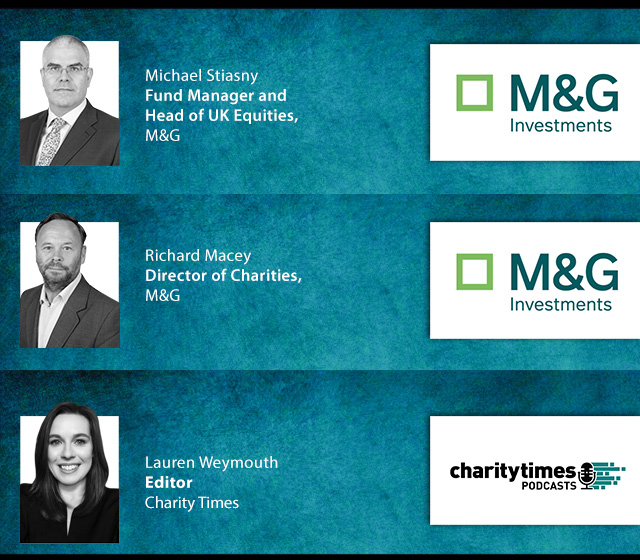
With charities facing increasing financial pressure and traditional income streams under strain, making investments work harder has never been more important. M&G’s Richard Macey and Michael Stiasny join Charity Times to discuss why equities remain a vital long-term asset class for charities, how organisations can balance income generation and growth, and the opportunities the current market environment may offer to help strengthen financial resilience.
Charity Times Awards 2023
Charity Times video Q&A: In conversation with Hilda Hayo, CEO of Dementia UK
Charity Times editor, Lauren Weymouth, is joined by Dementia UK CEO, Hilda Hayo to discuss why the charity receives such high workplace satisfaction results, what a positive working culture looks like and the importance of lived experience among staff. The pair talk about challenges facing the charity, the impact felt by the pandemic and how it's striving to overcome obstacles and continue to be a highly impactful organisation for anybody affected by dementia.




© 2021 Perspective Publishing Privacy & Cookies
Recent Stories