As a sector we are brilliant at talking about purpose. But purpose alone simply cannot keep a workforce going through uncertainty, restructures and rising demand. What keeps people going is trust, inclusion and leaders who understand the emotional cost of constant change, and act on it.
The conversations at this year’s Charity Times Conference made that clearer than ever. While the agenda covered strategy, digital, governance and innovation, the most honest moments were about our people. We spoke openly about the emotional reality of working in organisations that are constantly adapting. Leaders spoke about the grief that can come with change, the uncertainty that sits beneath every funding cycle, and the trust gaps that open when communication isn’t clear. These are the day to day realities for the people keeping our organisations going.
I was invited to speak on the final panel, 'How inclusive, people first cultures build sustainable charities'. What struck me most was how ready the room was to talk about the things we often avoid: the emotional labour of leadership, the pressure on middle managers and the uncomfortable space between what we put in our strategies and what we actually fund or make time for.
One of the points I brought from the What’s the Chari tea? community and podcast, as well as my work with Leeds Mind, was the importance of lived experience, especially around mental health. Our sector is full of people whose personal stories shape their purpose and that’s a huge asset but only when organisations put the right support around those people. No one should be left to shoulder their lived experience alone, or feel like it’s quietly expected of them because of the role they’re in. Managing lived experience well takes boundaries, support and thoughtful leadership.
And that leadership often sits with middle managers, who hold the bulk of this work, despite being one of the least supported groups in most organisations. They’re the ones holding wellbeing conversations, running one to ones, absorbing the organisational pressures and translating change for their teams. Quite often this group of employees also have their own lived experience too. And the majority are doing this without training, without space and without the support they need. If we want resilient organisations, we need to build a culture that offers managers the tools, time and confidence to lead with care, clarity and consistency.
Organisational culture isn’t an add on or something we dust off when times are easier. It’s the thing that shapes how people feel at work, how they treat each other and whether they can stay well while doing demanding jobs. It’s the foundation of inclusion, trust and long term sustainability. When culture is strong, people stay. They collaborate. They innovate. They weather uncertainty together. When we neglect our organisational culture, everything else becomes harder; recruitment, retention, decision making, even delivering impact.
If we want sustainable charities, we need to get serious about how work feels. This is no longer a ‘soft’ conversation, it’s a strategic one. Because the emotional reality of our workforce is central to whether we can deliver our missions at all.
Louise Dawtry is the founder of What’s the Chari-tea? a community and podcast that exists to help make the third sector a better place to work. The latest episode features guest, Katie Stevens, Director of Clinical Services at Demelza Children’s Hospice. You can listen to the podcast on Apple and Spotify, and connect with Louise on LinkedIn and join the community at Instagram @whatsthecharitea


Latest News
-
Arts venue charity to close after ‘exhausting all possible alternatives’
-
Hospice charity repeatedly targeted by criminals launches appeal to improve security
-
Children’s charity refreshes brand to be clearer ‘about who it is’
-
Monday movers – 12 October 2026
-
Council terminates charity’s £8.57m children's care home contract early amid staffing concerns
-
Charity boss shows her 'vulnerability' as she posts emotional grant rejection video


Beyond the funding squeeze: Using equities to secure your charity’s future
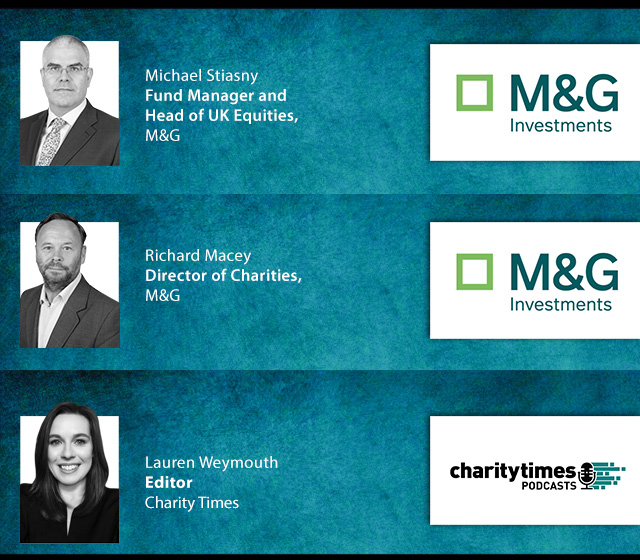
With charities facing increasing financial pressure and traditional income streams under strain, making investments work harder has never been more important. M&G’s Richard Macey and Michael Stiasny join Charity Times to discuss why equities remain a vital long-term asset class for charities, how organisations can balance income generation and growth, and the opportunities the current market environment may offer to help strengthen financial resilience.
Charity Times Awards 2023
Charity Times video Q&A: In conversation with Hilda Hayo, CEO of Dementia UK
Charity Times editor, Lauren Weymouth, is joined by Dementia UK CEO, Hilda Hayo to discuss why the charity receives such high workplace satisfaction results, what a positive working culture looks like and the importance of lived experience among staff. The pair talk about challenges facing the charity, the impact felt by the pandemic and how it's striving to overcome obstacles and continue to be a highly impactful organisation for anybody affected by dementia.




© 2021 Perspective Publishing Privacy & Cookies
Recent Stories