
Amy Low, CEO of AbilityNet explains why digital accessibility must be at the heart of UK charities' digital transformation and service delivery.
____________________________________________________________________
“It makes me feel like the internet doesn’t belong to me and isn’t a welcoming place.”
Scope’s 2020 Big Hack survey revealed the emotional toll of inaccessible websites. Beyond causing stress and frustration, they made people feel more disabled.
“Frustrated. Because it makes me feel disabled and useless.”
Everyday tasks like shopping, banking, or booking tickets left people feeling “upset,” “angry,” and “stupid.” One respondent summed it up: “Isolated. Excluded. Alone. Frustrated. Unimportant to society.”
Five years on from the survey, progress has been slow. WebAIM’s review of the top 1 million home pages found that 94.8% still have accessibility issues. In the charity sector,where digital support can be life-changing, there’s often a lack of awareness about how to design accessible digital journeys or procure services that prioritise inclusion.
AbilityNet exists to remove these barriers and champion the rights of disabled people to participate fully and equitably in the digital world. As its CEO, I see the power of digital to transform lives and increase charitable impact and we see amongst our clients a growing number really grasping the moral and business case of addressing these inequities.
Like all sectors, charities face pressure to digitise, driven by rising costs and user expectations for flexible, on-demand support. But with this shift comes responsibility. Digital accessibility is not optional, it’s essential.
There are 16 million disabled people in the UK. That’s nearly one in four. With an ageing population, this number will grow. For charities, this includes staff, volunteers, donors, and service users.
As services move online, from benefits to housing and healthcare, digital platforms have become the main route to support. For those who can access them, this is empowering. But for those who can’t, it leads to exclusion, frustration, and added costs, especially for those already on low incomes.
Accessibility is also a legal obligation. The Public Sector Bodies (Websites and Mobile Applications) Accessibility Regulations (PSBAR) requires public sector bodies, including many charities, to meet WCAG 2.2 AA standards. They must publish an accessibility statement outlining compliance, known issues, and plans for improvement.
Non-compliance risks enforcement, reputational damage, and - most importantly - excludes those who need support most. Accessibility checks must extend to third-party tools and apps too.
The good news? Accessibility is achievable. It’s not mysterious or expensive. Many improvements, like clear text, logical navigation, image descriptions, colour contrast, and assistive tech compatibility, can be built in from the start. AbilityNet offers free training and a helpline (0300 180 0028) to support with this.
What struck me immediately when I began working in accessibility is that accessible design benefits everyone. Captions help in noisy environments as well as for those with hearing loss. Larger buttons aid both people with tremors and mobile users. A well-structured site improves usability for all.
Charities are rooted in inclusion, compassion, and equality. Championing digital accessibility is a natural extension of these values. It’s not just ethically right - it’s strategic, helping charities reach wider audiences and futureproof their impact.
Blind Veterans UK is a great example. In 2023, it launched a new website with accessibility at its core. They consulted disabled users, hired a skilled agency, and conducted a WCAG audit. The result? AbilityNet’s Accreditation Plus rating.
One user said: “It’s well and thoughtfully designed, intuitive to use, and provides the information that’s needed in a concise manner. For accessibility, definitely five out of five.”
Matthew Cooper from the BBC’s In Touch programme added: “It’s obvious they thought about accessibility in the design process. I’m impressed with how controls are labelled and how every photo is captioned. It feels like a native website - not one adapted for screen readers.”
If you’re unsure whether your charity’s website or app is accessible, help is available. Contact us at AbilityNet for guidance on how to check and improve your digital services.


Beyond the funding squeeze: Using equities to secure your charity’s future
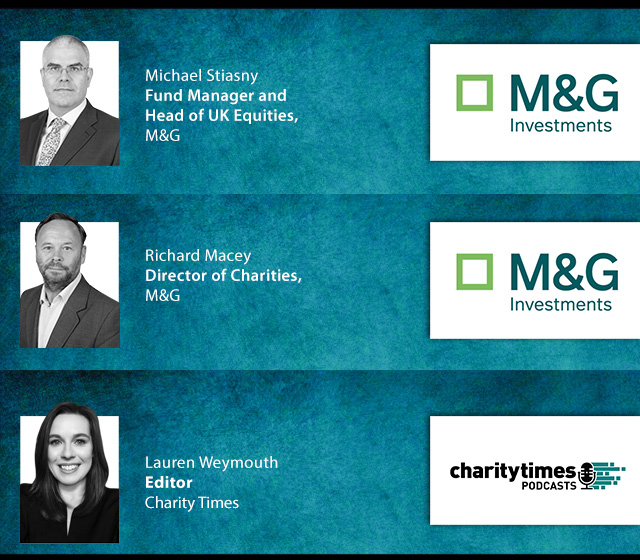
With charities facing increasing financial pressure and traditional income streams under strain, making investments work harder has never been more important. M&G’s Richard Macey and Michael Stiasny join Charity Times to discuss why equities remain a vital long-term asset class for charities, how organisations can balance income generation and growth, and the opportunities the current market environment may offer to help strengthen financial resilience.
Charity Times Awards 2023
Charity Times video Q&A: In conversation with Hilda Hayo, CEO of Dementia UK
Charity Times editor, Lauren Weymouth, is joined by Dementia UK CEO, Hilda Hayo to discuss why the charity receives such high workplace satisfaction results, what a positive working culture looks like and the importance of lived experience among staff. The pair talk about challenges facing the charity, the impact felt by the pandemic and how it's striving to overcome obstacles and continue to be a highly impactful organisation for anybody affected by dementia.


© 2021 Perspective Publishing Privacy & Cookies
Recent Stories