

Quiet leadership has long been undervalued. Dr Alex Rhys, CEO of the Infection Prevention Society, explains why introverted leaders are essential to a thriving charity sector.
______________________________________________________________________
When we picture effective charity leadership, the image that often comes to mind is someone commanding a room, inspiring crowds at fundraising events, or effortlessly working a networking reception. This stereotype has become so embedded in how we think about leadership that many capable, thoughtful leaders question whether they belong in senior charity roles at all.
Of course, personality types are complex and individual, and effective leaders come in many forms. The following reflections necessarily involve some generalisation, but the core point remains: it's time to challenge the assumption that effective leadership requires one particular communication style. The charity sector needs diverse leadership approaches, and some of our most effective leaders are the ones who prefer listening to speaking, thinking to reacting, and building others up rather than taking centre stage.
The narrow leadership lens
The traditional model of charity leadership emphasises visibility, charisma, and the ability to inspire large groups. Job descriptions call for "dynamic" leaders who can be the "face" of the organisation. Recruitment processes often favour candidates who interview well, present confidently, and demonstrate immediate presence.
This approach isn't necessarily wrong, but it's incomplete. It assumes that effective leadership requires a particular personality type and communication style, overlooking the reality that much of successful leadership happens away from the spotlight.
The irony is that many of the skills we actually need in charity leadership - careful listening, thoughtful decision-making, strategic planning, and building trust through consistent action - can be found across different personality types and don't necessarily require high-energy public presentation skills.
The quiet strengths
Introverted leaders often bring distinctive strengths that serve organisations exceptionally well. They tend to be natural listeners, taking time to understand different perspectives before making decisions. In a sector built on understanding and responding to complex social needs, this inclination towards deep listening can be invaluable.
Many introverted leaders excel at one-to-one relationships, building strong connections with individual team members, trustees, or stakeholders. While they might not energise a room of 200 people, they often create the kind of trust and understanding that enables effective collaboration and long-term partnerships.
There's also the strategic advantage of leaders who think before they speak. In an environment where decisions can have significant impact on vulnerable communities, having leaders who naturally reflect, consult, and consider consequences can prevent costly mistakes and build more sustainable approaches.
The behind-the-scenes reality
Much of effective charity leadership happens in contexts where introverted strengths are perfectly suited: small team meetings, careful budget planning, thoughtful policy development, and building systems that enable others to succeed.
Some of the most transformational charity leaders are those who focus on creating the conditions for their teams to excel rather than being the primary face of every initiative. They build strong operational foundations, develop clear strategies, and empower others to deliver on the organisation's mission.
These leaders might not generate headlines, but they often generate sustainable impact. They're the ones who quietly build the partnerships, develop the frameworks, and create the organisational culture that enables long-term success.
Different challenges, different leaders
The charity sector faces an enormous range of challenges, and different leadership styles are suited to different moments and contexts. Sometimes organisations need leaders who can galvanise support and drive rapid change. At other times, they need leaders who can carefully navigate complex stakeholder relationships or thoughtfully rebuild after crisis.
Introverted leaders often excel during periods requiring careful analysis, stakeholder consultation, or rebuilding trust. They may be particularly effective in specialist or technical areas where deep expertise matters more than public presentation skills.
The most successful organisations often have leadership teams that combine different personality types and communication styles, allowing them to respond effectively to various situations and connect with diverse stakeholders.
Expanding our definition
The challenge isn't that any particular leadership style dominates charity leadership, it's that our recruitment and development processes can unconsciously favour candidates who fit the traditional leadership stereotype, regardless of whether that style is most suited to the specific role or organisation.
This means we're potentially overlooking candidates who could be highly effective leaders but don't fit the traditional mould. It also means current leaders who are more naturally introverted may feel pressure to adopt an extroverted style rather than leveraging their natural strengths.
Effective leadership development should help all leaders understand their natural style and how to maximise its effectiveness, rather than pushing everyone towards a single model.
Practical recognition
Creating space for diverse leadership styles requires practical changes in how we approach recruitment, development, and governance. This might mean adjusting interview processes to assess leadership capability rather than just presentation skills, or ensuring development programmes address different leadership approaches.
It also means recognising that different roles within charity leadership may suit different personality types. A CEO role requiring significant public representation demands different skills from a CEO role focused on organisational development or strategic partnerships.
The goal isn't to favour any particular leadership style over others, but to create environments where different approaches can be recognised, valued, and effectively utilised.
The sector we need
The charity sector benefits from having leaders who reflect the diversity of approaches needed to address complex social challenges. Some situations require bold, visible leadership. Others require careful, consultative approaches. Most require a combination of both.
By expanding our understanding of effective leadership beyond the traditional leadership stereotype, we create opportunities for more people to contribute their skills and perspectives to charitable work. We also build more resilient organisations that can respond effectively to different challenges and connect authentically with diverse communities.
The quiet leaders are already among us, often delivering exceptional results without fanfare. It's time to ensure they're not just tolerated, but genuinely recognised and valued for the distinctive contributions they make to our sector.
_________________________________________________________________
Dr Alex Rhys is chief executive of the Infection Prevention Society and CEO/Founder of It Gets Better UK. Alongside these roles, they run The Leadership Nook, a coaching and consultancy practice focused on values-based sustainable leadership across the charity and healthcare sectors.



Beyond the funding squeeze: Using equities to secure your charity’s future
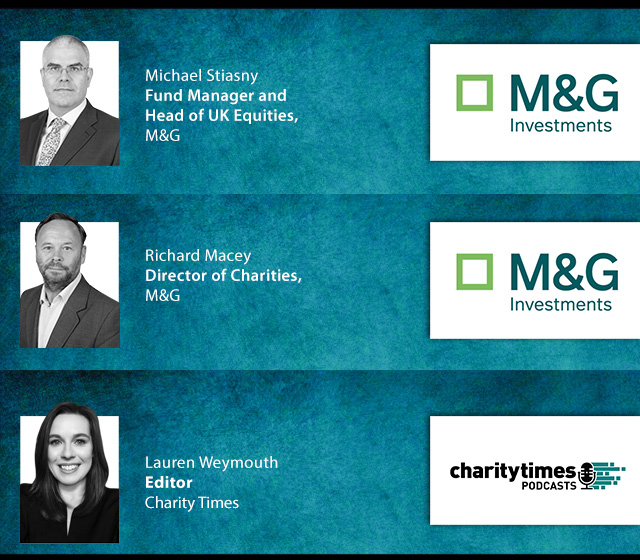
With charities facing increasing financial pressure and traditional income streams under strain, making investments work harder has never been more important. M&G’s Richard Macey and Michael Stiasny join Charity Times to discuss why equities remain a vital long-term asset class for charities, how organisations can balance income generation and growth, and the opportunities the current market environment may offer to help strengthen financial resilience.
Charity Times Awards 2023
Charity Times video Q&A: In conversation with Hilda Hayo, CEO of Dementia UK
Charity Times editor, Lauren Weymouth, is joined by Dementia UK CEO, Hilda Hayo to discuss why the charity receives such high workplace satisfaction results, what a positive working culture looks like and the importance of lived experience among staff. The pair talk about challenges facing the charity, the impact felt by the pandemic and how it's striving to overcome obstacles and continue to be a highly impactful organisation for anybody affected by dementia.




© 2021 Perspective Publishing Privacy & Cookies
Recent Stories