
People in wealthy countries continue to give less of their earnings to good causes than those in lower income regions, research has found.
The Charities Aid Foundation’s latest World Giving Report is based on surveys of more than 60,000 people across 105 countries.
This found that globally people donated on average 1% of their income.
But the proportion is much higher across African nations, where 1.6% is given, and far lower in Europe, where the figure is just 0.6%.
This disparity in giving between richer and poorer regions was also prevalent in last year's global giving report from CAF.
The UK is among the poorest performers in terms of percentage of earnings given to good causes, despite being the 25th richest nation in the world, according to latest International Monetary Fund (IMF) figures.
In the UK people donated 0.7% of their income, down on last year’s figure of 0.75%. This has seen the UK slump from the 64th most generous in terms of percentage of income given to 75th.
Previous research by CAF released earlier this year into local giving by Brits to charity also recorded a fall in the proportion of earnings donated in the UK. This found that among the least generous areas were affluent Kensington & Bayswater, while the most generous was Sheffield Hallam.
Global fall in giving
CAF’s research also found a global slump in the proportion of people giving to good causes, from 64% in 2024 to 61% in 2025. Using this metric the UK is ranked 5th in the world, at 62%.
In the UK Less than one in five donations in the UK goes to global charities, while just under one in four is made to local charities and just under three in five are made to national charities.
Most generous country revealed
The most generous country in the world is Nigeria, where people give an average of 2.8% of their income to good causes. Ghana is the second most generous, with a figure of 2.4%. Both are ranked outside the top 160 richest countries in the world, according to the IMF.
Overall, the ten most generous countries are in Africa and Asia.
Among the least generous is Portugal, which is ranked 100 out of 105 countries with people giving away on average 0.4% of their income.
Meanwhile, Germany is ranked 98th out of 105 countries looked at, with people similarly donating 0.4% of their income on average.
In 104th ranked Latvia people give away 0.3% of their earnings on average.
Globally the most generous age group are those aged 25 to 44.. They donate twice as much of their income on average compared to the over 55s (1.2% v 0.6%).
Most popular causes
Religious groups are the most popular cause to donate to globally, supported by just over three in ten people, followed by children and young people and poverty relief, which are supported by just under three in ten.
Despite Europe lagging behind Africa in terms of giving overall, donors in higher income countries including those in Europe give a higher share of their earnings to charities working globally, compared to those in lower income countries.
Community spirit
A strong sense community is key to giving, CAF’s report found.
In countries where more than four in five people feel a strong sense of belonging to their local community, giving is more than three times higher than where community spirit is low.
“Giving is deeply personal based on different factors including values, circumstances and experiences,” said CAF managing director Mark Greer.
“By understanding these influences and how they appear around the world, we can learn what drives vibrant cultures of giving to support the resilience of civil society.
“We all have a role to play in growing giving. Encouraging conversations, and more importantly, action by individuals, charities, businesses, and governments can help build stronger and more thriving civil societies.”


Latest News
-
Arts venue charity to close after ‘exhausting all possible alternatives’
-
Hospice charity repeatedly targeted by criminals launches appeal to improve security
-
Children’s charity refreshes brand to be clearer ‘about who it is’
-
Monday movers – 12 October 2026
-
Council terminates charity’s £8.57m children's care home contract early amid staffing concerns
-
Charity boss shows her 'vulnerability' as she posts emotional grant rejection video


Beyond the funding squeeze: Using equities to secure your charity’s future
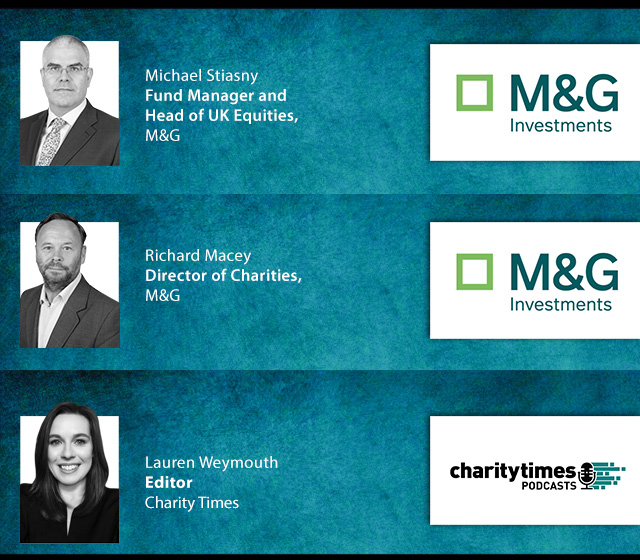
With charities facing increasing financial pressure and traditional income streams under strain, making investments work harder has never been more important. M&G’s Richard Macey and Michael Stiasny join Charity Times to discuss why equities remain a vital long-term asset class for charities, how organisations can balance income generation and growth, and the opportunities the current market environment may offer to help strengthen financial resilience.
Charity Times Awards 2023
Charity Times video Q&A: In conversation with Hilda Hayo, CEO of Dementia UK
Charity Times editor, Lauren Weymouth, is joined by Dementia UK CEO, Hilda Hayo to discuss why the charity receives such high workplace satisfaction results, what a positive working culture looks like and the importance of lived experience among staff. The pair talk about challenges facing the charity, the impact felt by the pandemic and how it's striving to overcome obstacles and continue to be a highly impactful organisation for anybody affected by dementia.




© 2021 Perspective Publishing Privacy & Cookies
Recent Stories