Large charities dominate public procurement contracts that are delivered by civil society, government commissioned research has revealed.
It found that charities with incomes between £1m and £100m account for nearly two thirds of contracts “and an even larger share of funding”.
This is a pattern that is replicated for contracting involving Community Interest Companies (CIC), found the Department for Culture, Media and Sport (DCMS)’s research report Mapping and Understanding the UK Civil Society Sector.
Large CICs account for more than 60% of contracting involving their type of organisation.
Meanwhile, “micro and small organisations of all types are almost entirely absent from procurement markets”, the research found.
While the largest charities, of £100m plus income a year win just 8.8% of contracts, these capture 15.7% of total charity funding.
This confirms “that the largest organisations tend to win higher-value contracts”, found researchers.
The research also shows that civil society procurement varies “considerably” across Government departments. While some allocate more than nine in ten contracts to charities, “others direct the majority to other non-profit companies”.
The DCMS, Care Quality Commission, Department for International Development, Foreign Office, Highways England, Homes England and the Money & Pensions Service are among public bodies where at least 90% of their total commissioning with civil society is made with charities.
Among those who rarely commission from charities when using civil society are the UK Health Security Agency, HM Treasury, HM Land Registry and the Department for International Trade.
Community Interest Companies, Co-operatives and Mutuals are preferred with these departments.
The research uses The UK Data Spine’s figures, which is the first comprehensive register of the UK’s civil society sector, involving 770,923 organisations, including 194,000 charities.
Benefits of commissioning civil society
A separate report published by the government has looked at the impact on public services when they are delivered by civil society organisations.
This found they deliver “holistic, person-centred approaches that address root causes and multiple needs simultaneously” and “trusted early interventions enabled by deep community embeddedness”.
Another benefit is civil society service delivery offers recipients “safe, supportive environments that foster belonging and enable earlier engagement with support”.


Latest News
-
Arts venue charity to close after ‘exhausting all possible alternatives’
-
Hospice charity repeatedly targeted by criminals launches appeal to improve security
-
Children’s charity refreshes brand to be clearer ‘about who it is’
-
Monday movers – 12 October 2026
-
Council terminates charity’s £8.57m children's care home contract early amid staffing concerns
-
Charity boss shows her 'vulnerability' as she posts emotional grant rejection video


Beyond the funding squeeze: Using equities to secure your charity’s future
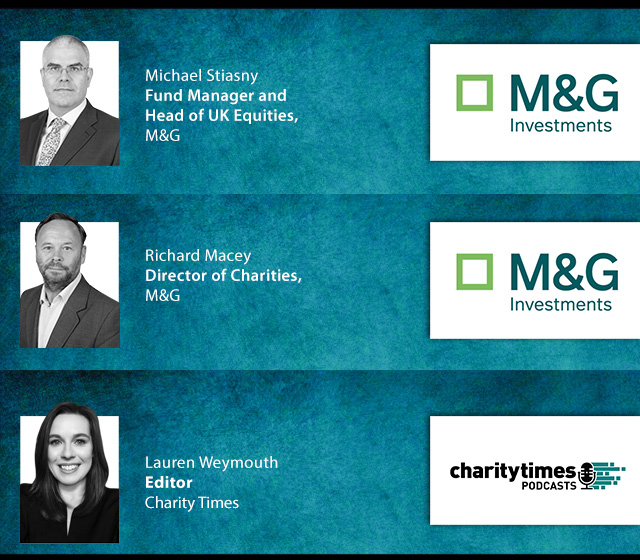
With charities facing increasing financial pressure and traditional income streams under strain, making investments work harder has never been more important. M&G’s Richard Macey and Michael Stiasny join Charity Times to discuss why equities remain a vital long-term asset class for charities, how organisations can balance income generation and growth, and the opportunities the current market environment may offer to help strengthen financial resilience.
Charity Times Awards 2023
Charity Times video Q&A: In conversation with Hilda Hayo, CEO of Dementia UK
Charity Times editor, Lauren Weymouth, is joined by Dementia UK CEO, Hilda Hayo to discuss why the charity receives such high workplace satisfaction results, what a positive working culture looks like and the importance of lived experience among staff. The pair talk about challenges facing the charity, the impact felt by the pandemic and how it's striving to overcome obstacles and continue to be a highly impactful organisation for anybody affected by dementia.




© 2021 Perspective Publishing Privacy & Cookies
Recent Stories