More than four in five people want NHS commissioners to use charities and social enterprises more to support people’s health, a survey has found.
A further three in five want the NHS to start taking active steps to work with a greater proportion of third sector suppliers. Just under three in four want NHS procurement to prioritise UK based organisations too.
The NHS ethos of offering free healthcare for all at the point of delivery is among drivers in public support for good causes to be more involved in the supply chain.
But despite public support just 1% of total NHS procurement spending is currently used on charities, according to the Yonder Consulting poll for workforce development organisationSkills for Health.
In February the government issued its updated National Public Policy Statement signalling an intention for public bodies to commission more from charities. But real terms spending on third sector suppliers in some areas is forecast to have declined during 2024/25, Skills for Health warns.
“The third sector makes a vital contribution to the delivery of NHS services, whether behind the scenes or out in the community providing care to patients on behalf of - or in partnership with – NHS providers,” said Skills for Health managing director Jon Czul.
“It is encouraging to see that a majority of the public seems to recognise this fact and, moreover, that the public identifies closely with the principles and values that the third sector embodies.
“The delivery of integrated people-centred care requires a partnership approach that utilises the expertise and resources of public, private and third sectors, as well as working closely with stakeholders whose values reflect those of the public and the NHS.
“It follows that there is definite scope for third sector organisations to play an expanded role in supporting UK healthcare provision into the future.”
Also calling for greater charity involvement in public procurement is charity sector body NCVO. Its chief executive Sarah Elliot said: “Charities and voluntary organisations play a vital role in our health system.
“They are rooted in communities, trusted by the people they support, and bring specialist knowledge shaped by lived experience. From mental health to end-of-life care, they often reach people others can’t.
“This polling shows the public recognises their value. But too often, commissioning creates unnecessary barriers for charities – especially smaller ones – resulting in exclusion from delivery or unsustainable funding arrangements.
“If we want more person-centred care, we need a commissioning environment that provides greater recognition of the value that charities bring as a strategic partner in service design and delivery.”

Latest News
-
Outdoor activities charity to close amid ‘financial and operational challenges’
-
Monday movers – 24 August 2026
-
Older people’s charity to close due to ‘ongoing financial pressures’
-
Rape crisis charity receives ‘vile abuse’ after rejecting group’s fundraising offer
-
Friday funding round up – 21 August
-
Trustee disputes increase amid financial pressures and societal tensions, warns regulator




Beyond the funding squeeze: Using equities to secure your charity’s future
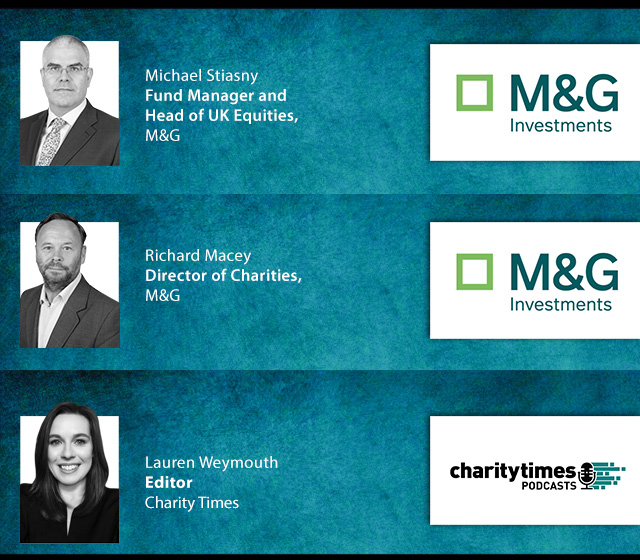
With charities facing increasing financial pressure and traditional income streams under strain, making investments work harder has never been more important. M&G’s Richard Macey and Michael Stiasny join Charity Times to discuss why equities remain a vital long-term asset class for charities, how organisations can balance income generation and growth, and the opportunities the current market environment may offer to help strengthen financial resilience.
Charity Times Awards 2023
Charity Times video Q&A: In conversation with Hilda Hayo, CEO of Dementia UK
Charity Times editor, Lauren Weymouth, is joined by Dementia UK CEO, Hilda Hayo to discuss why the charity receives such high workplace satisfaction results, what a positive working culture looks like and the importance of lived experience among staff. The pair talk about challenges facing the charity, the impact felt by the pandemic and how it's striving to overcome obstacles and continue to be a highly impactful organisation for anybody affected by dementia.




© 2021 Perspective Publishing Privacy & Cookies
Recent Stories