
One in four charities are warning they are poorly equipped for financial and operational success over the next three years, a global survey of the sector has found.
It also found that more than one in three warn the charity sector in their country is “unhealthy” and blighted by funding shortages, financial instability, government hostility, political interference and a “shrinking civic space”.
Other factors in their pessimism for the future are “low public trust, poor reputation and a lack of recognition”, found the research, which has been carried out by Charities Aid Foundation.
While there is no continent where the majority of charities feel well equipped for the future, those in lower income countries are more confident.
Over the coming years, the outlook is more positive for charities in North America, Oceania and Asia, where more than two in five feel well set up for the future.
Smaller charities are more pessimistic than their larger counterparts globally, CAF also found.
In addition, charities offering frontline support, working in arts, culture, environmental, human rights and mental health are among the least confident about their future.
Rising demand
Rising demand is also among factors leading to pessimism about the future among charities. Two in three are reporting increases in demand for their services over the past year and two in five say they are struggling to cope with this surge.
This is particularly a problem for charities in lower income countries, where more than three in four are reporting an increase in demand and more than four in five are struggling.
Income diversification
Income diversification is also a challenge, with only one in five charities globally saying they are confident their income streams are diverse enough to withstand a sudden loss of funding.
Almost half warn they may be forced to close within the next six months if external funding they received stopped.
On average charities globally receive funding from four sources, but this is higher among larger charities and those in high-income countries.
Donations from the public is the most widely received source of funding, particularly among lower income countries. Globally this accounts for more than two thirds of income for the sector.
Other major sources of funding include grants from philanthropists, businesses and domestic grantmakers.
The lowest forms of funding are from international funders, wills and other countries’ governments.
Characteristics of confidence
Common themes among the most confident charities are effective impact measurement, flexible funding and having strong networks. Almost two thirds of charities are warning that the funding they receive is restricted.
A strong focus on training and wellbeing support for staff is another indicator of a more confident and resilient charity.
CAF is urging funders to support charities to be more resilient organisationally.
“Charities are increasingly aware of the need to invest in themselves to build their organisational resilience and be prepared for future challenges and opportunities,” said CAF head of impact Ashling Cashmore.
“However, finding funds for resilience work is difficult as this is often labelled as 'overheads' and can be a harder sell than direct delivery work with communities and people.
“Funders investing in resilience are giving charities the capacity to strengthen and drive their impact.”
CAF managing director Mark Greer added: “This research clearly highlights that a considerable amount of charity leaders’ time is taken up by the demands of the day-today running of their organisations, with less time than they would like on strategic long-term thinking.
“This is a common tension we observe among the charities we advise and support. Yet, leaders who are able to step back and prioritise strategic work, are also those that feel most optimistic and secure for the future.”


Latest News
-
Arts venue charity to close after ‘exhausting all possible alternatives’
-
Hospice charity repeatedly targeted by criminals launches appeal to improve security
-
Children’s charity refreshes brand to be clearer ‘about who it is’
-
Monday movers – 12 October 2026
-
Council terminates charity’s £8.57m children's care home contract early amid staffing concerns
-
Charity boss shows her 'vulnerability' as she posts emotional grant rejection video


Beyond the funding squeeze: Using equities to secure your charity’s future
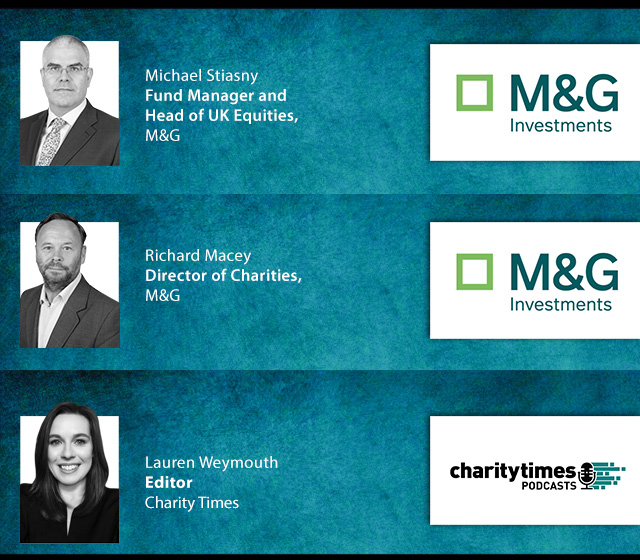
With charities facing increasing financial pressure and traditional income streams under strain, making investments work harder has never been more important. M&G’s Richard Macey and Michael Stiasny join Charity Times to discuss why equities remain a vital long-term asset class for charities, how organisations can balance income generation and growth, and the opportunities the current market environment may offer to help strengthen financial resilience.
Charity Times Awards 2023
Charity Times video Q&A: In conversation with Hilda Hayo, CEO of Dementia UK
Charity Times editor, Lauren Weymouth, is joined by Dementia UK CEO, Hilda Hayo to discuss why the charity receives such high workplace satisfaction results, what a positive working culture looks like and the importance of lived experience among staff. The pair talk about challenges facing the charity, the impact felt by the pandemic and how it's striving to overcome obstacles and continue to be a highly impactful organisation for anybody affected by dementia.




© 2021 Perspective Publishing Privacy & Cookies
Recent Stories