
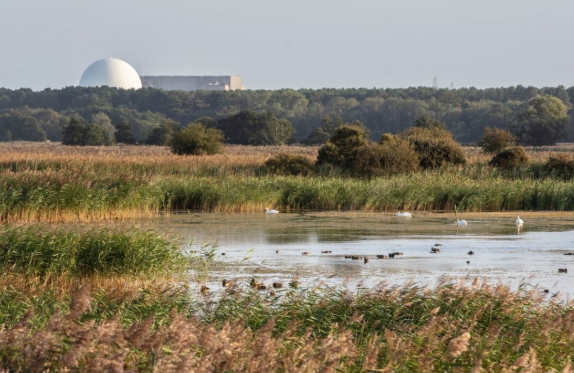
Sizewell C nuclear power station in Suffolk has created a grant giving charity focused on enhancing biodiversity in the county.
Through the charity, called East Suffolk Trust (EaST), the nuclear power plan has pledged to spend £78m on environmental projects in Suffolk over the next 70 years.
Suffolk County Council and East Suffolk Council are also involved in creating the charity, which is currently recruiting for its first chief executive and plans to award its first grants next year. It will publish details of how to apply later this year.
Sizewell C, which is currently under construction, will donate £1.5m throughout the power station’s construction and the first 20 years of its operation. It will then continue to donate £750,000 annually. Further funding will be sought from local businesses.
Sizewell C is set to generate power for at least 60 years and potentially up to 100.
In addition to Sizewell C’s contributions, EaST will seek further funding from local businesses and organisations.
“It’s right that we invest in nature in Suffolk,” said Sizewell C joint managing director Julia Pyke.
She concedes that “the construction of Sizewell C will have "some impacts on the local environment” but that setting up the charity will help it leave “a positive environmental legacy in East Suffolk” after the power station is completed.
EaST trustee Clare Matterson, who is director general of the Royal Horticultural Society, added that the charity will help reverse a decline in animal and plant life in the region.
Suffolk County Council cabinet member for environment, communities and equalities said: “The charity’s ambitious grant-giving programme will empower people and organisations to better conserve, protect and enhance Suffolk’s existing wild landscapes and seascapes.
“From hedgerows to woodlands, ponds to wetlands, EaST will boost biodiversity and build resilient eco-systems to address the dual challenges we face; climate change and the biodiversity crisis.”


Latest News
-
Hospice charity consults staff on restructure plans amid £1.8m deficit
-
Charity secures ten-year government contract worth £85m
-
Mental Health charity rebrands
-
Millionaire charity founder's legacy mismanaged by trustees, regulator finds
-
Charity reports itself to police and regulator after ‘significant concerns’ emerge
-
Civil society is ‘critical to the success of our country’, says PM




Video Q&A: In conversation with Vicki Sellick MBE, CEO of Good Things Foundation
Vicki Sellick MBE, CEO of Good Things Foundation joins Charity Times editor, Lauren Weymouth to discuss her leadership journey, the organisation’s new strategy and the findings of the Digital Nation 2026 report. She explores the challenges of digital inclusion, the opportunities and risks of AI, and how the sector can ensure nobody is left behind.
Video Q&A: Benefits of bespoke investment vs pooled funds for the third sector
In this Charity Times video Q&A, editor Lauren Weymouth speaks to Ed Caswell of RBC Brewin Dolphin to explore how charities can align investment strategies with their mission, balance income and growth, and adapt to changing needs. He discusses discretionary management, responsible investment and the importance of effective governance and regular portfolio reviews.
Charity Times Awards 2023




© 2021 Perspective Publishing Privacy & Cookies
Recent Stories